Arc Design System
A large-scale, token-based design system I owned end-to-end—built the entire variable layer from zero and drove 99% adoption across the org.
The starting point
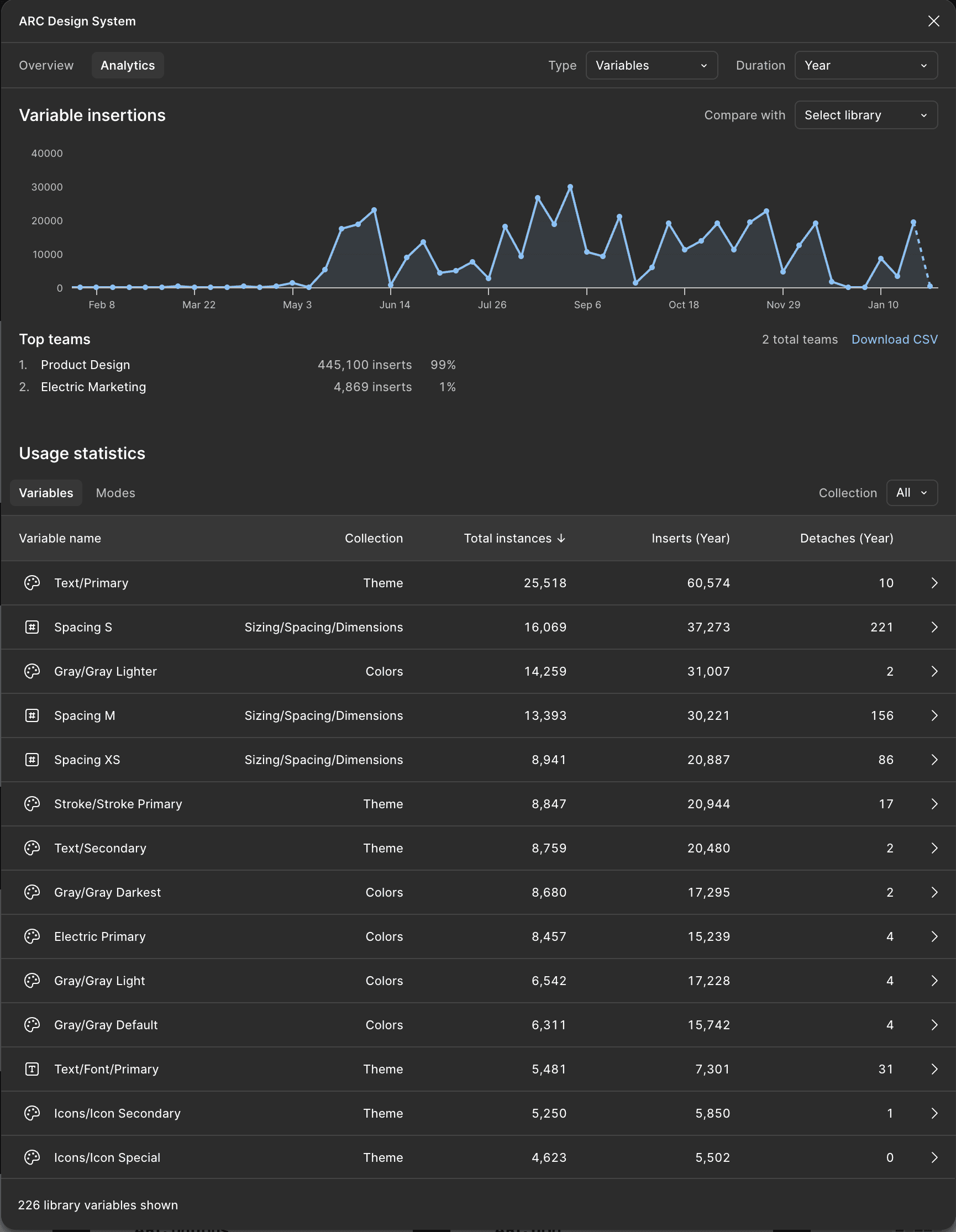
Electric AI had a design system when I arrived in February—an old one, drifting further from the product every sprint. My job was to transform it: modernize the foundation, rebuild what no longer served the teams. The variable layer got the most radical treatment—all 226 variables authored from zero, no legacy tokens carried forward.
The quiet part
For two months the charts flatline near zero. That wasn't stalling—it was architecture. I rebuilt from the primitives up: primitive values, then a semantic token layer, then the components on top, structured into collections like Theme, Colors, and Sizing/Spacing/Dimensions so the system could flex across modes. Foundations are invisible when they're done right, and that flat runway is the entire reason the rest of the graph exists.
The inflection point
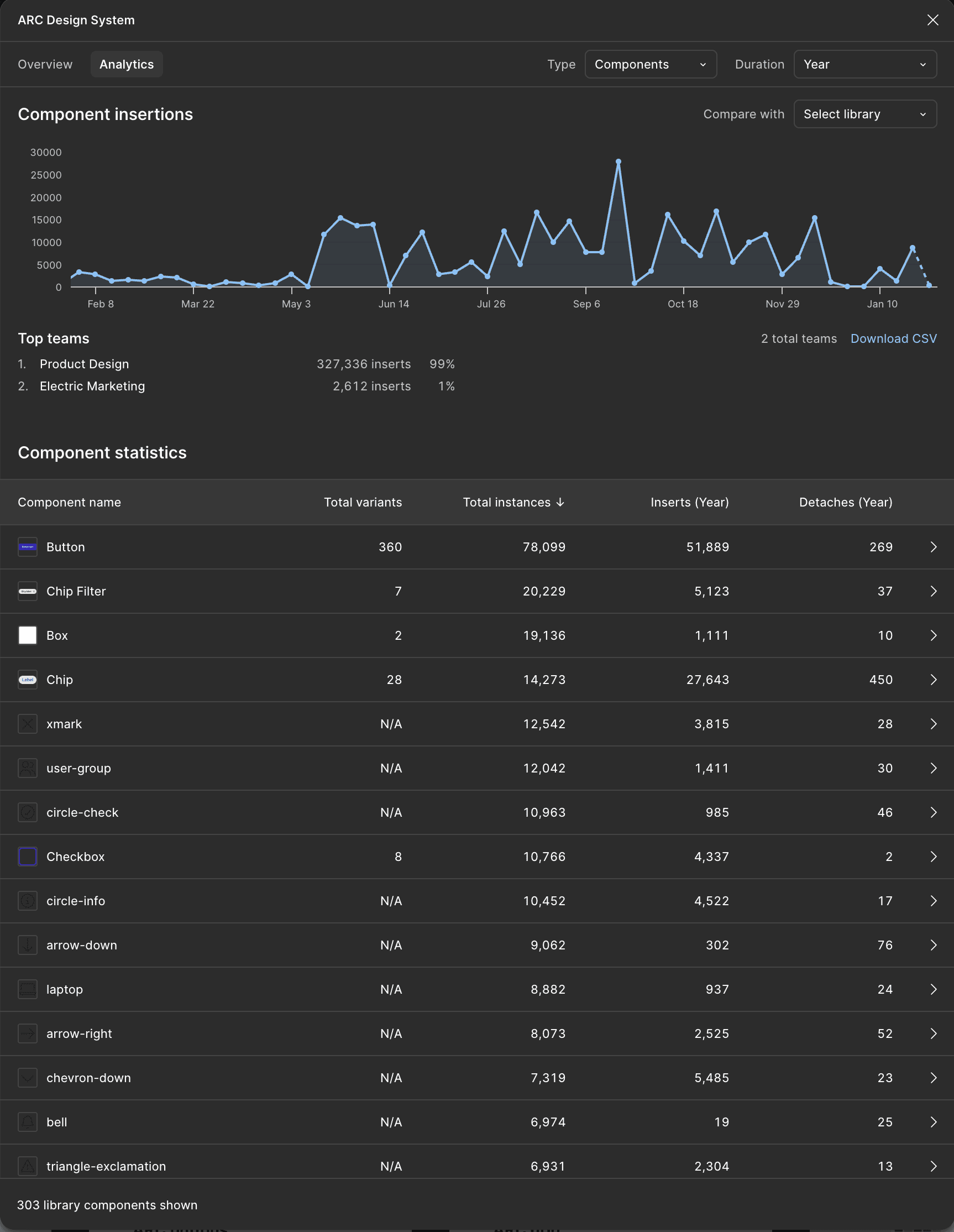
In early May the line snaps upward and never comes back down. 445,100 variable insertions and 327,336 component insertions logged across the year, over 226 variables and a 303-component library. The spikes aren't noise—they're the weeks ARC became the default way teams built.
Proven adoption
The number I'm proudest of hides in the detach column: Buttons, 51,889 insertions against 269 detaches. Checkboxes, 4,337 in, 2 out. High usage with near-zero detachment means teams weren't tearing components apart—the system fit how people actually worked. By January, ARC accounted for 99% of design usage across the product org.